Every year, more than ten million people in the United States experience intimate partner violence, a reality that also affects their pets. That’s why Greater Good Charities and RedRover work together to create effective and sustainable pet housing programs for people and pets in crisis.
The Impact of Forced Human-Pet Separation
A recent study comprised of 27 years of international research shows significant psychological distress and increased risks to health and well-being when individuals are forced to separate from their pets. The emotional attachment creates vulnerability when this bond is threatened.
Unfortunately, roughly 50% of survivors delay leaving their abuser out of concern for their pet’s safety, and 71% of survivors report that their abuser injured, killed, or threatened their pet. Studies also show that children are present 90% of the time when abuse against the pet is taking place, exacerbating their risk of negative psychosocial outcomes and future violence.
Many survivors are forced to make a heart-wrenching choice to save themselves or leave their beloved pets behind to face further abuse. The emotional toll of this decision is unimaginable.
Why Renovating Shelters Saves Lives
Renovating shelters to accommodate both survivors and their pets removes a barrier preventing survivors from leaving abusive situations. It gives them hope for a better future, but even more, it has significant and tangible health benefits, both physical and mental.
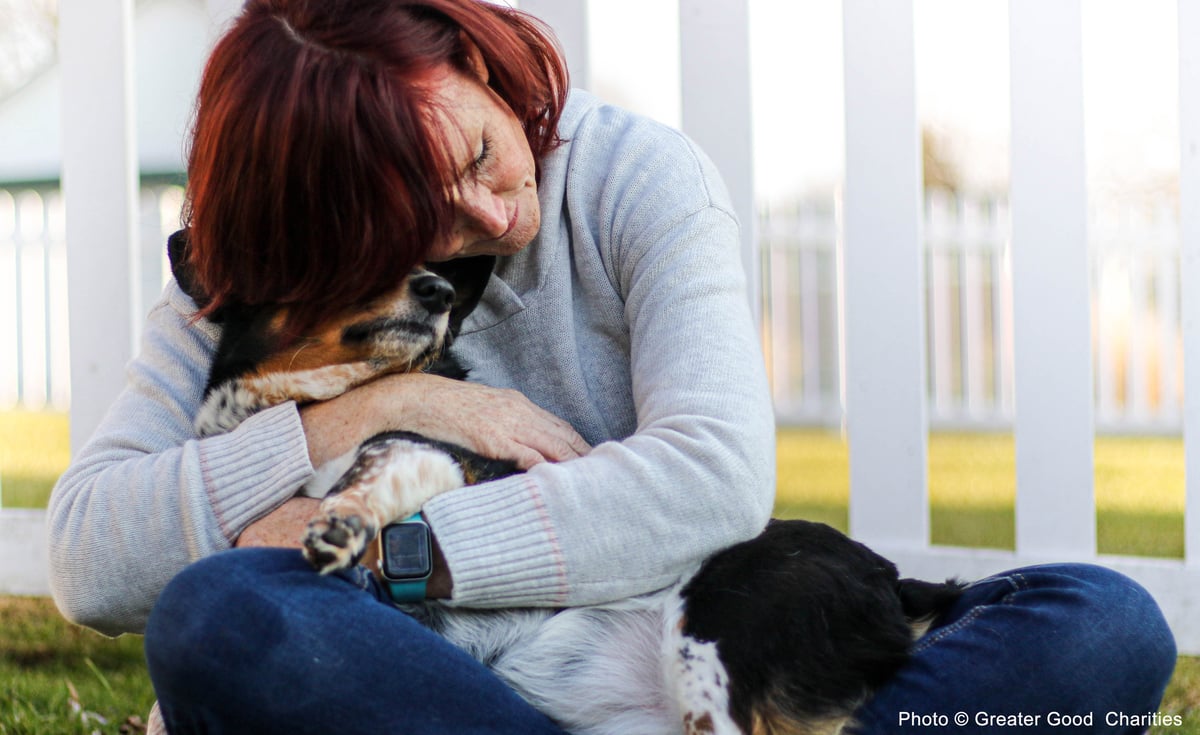
Greater Good Charities’ Executive Vice President Bryna Donnelly points out that spending as few as five minutes with a pet lowers blood pressure and reduces the levels of stress hormones like cortisol, according to peer-reviewed research. Animal interactions increase “happy chemicals,” which are crucial to the healing process. In fact, over 90% of survivors report that their pets played a significant role in their ability to survive and heal. The human-animal bond provides a feeling of security, a sense of responsibility, and increases confidence.
Plus, allowing animals in the shelter environment means staff can say “yes” to more people in crisis, and makes a temporary refuge feel more like a home. Hear one survivor’s story about how her cat, Sasha, helped her find safety and begin her next chapter.
A Partnership for Survivors of Domestic Violence and Their Pets
Greater Good Charities’ construction team partners with RedRover to build pet-inclusive housing programs that keep families together—we’ve provided nearly 456,000 nights of safety for those in crisis.
RedRover’s mission is to bring animals out of crisis and strengthen the bond between people and animals through emergency sheltering, disaster-relief services, financial assistance, and education. We joined forces with them in a collaboration that led to the 2019 creation of Don’t Forget the Pets, dedicated to helping families stay together through crisis.
Today, Don’t Forget the Pets provides support to organizations throughout the country, giving them the tools they need to build pet housing programs in their communities. Check out resources like online courses, blogs and webinars today!
Getting Our Hands Dirty: Shelter Renovation
When our construction team and RedRover volunteers come together to renovate a shelter, we implement many creative ways to accommodate animals specific to the facility and its needs. These can include:
- Construction or conversion of private and communal rooms with pet-friendly flooring, soundproofing, pet beds, and enrichment items like toys and catios so residents can spend comfortable, fulfilling time with their pets
- We use durable, sanitizable materials for walls, flooring and furniture to improve cleanliness and reduce allergens.
- Renovation or addition of outdoor spaces like kennels and play yards with protective and/or privacy fencing, ideal ground cover, and enrichment like agility steps and tire tunnels so pets can exercise safely
- Addition of elements to maximize flow from intake, to bedroom or kennel space, to outdoor relief and enrichment areas, creating peace of mind for staff and residents and limiting unwanted animal interactions
Our team also helps DV shelters facilitate partnerships with local animal shelters. They help arrange Temporary Care Programs that can extend beyond service to domestic violence survivors to help those experiencing homelessness or entering rehabilitation programs. These programs provide temporary housing and care for the animals of people in transitionary phases—working through housing instability, medical emergencies, or domestic violence—until they can bring their pets into stable environments.
Once established, pet-friendly services in domestic violence shelters work seamlessly in tandem with survivor services. When individuals don’t need to worry about accessing adequate care for their pets, they can focus on the counseling, planning, and legal support that will help them move forward.
How You Can Help Survivors of Domestic Violence and Their Pets
When you donate, you help us renovate shelters to offer a safe haven for families and their pets. You'll be funding hands-on, community-driven work that transforms spaces where both humans and animals find refuge.
When we make room for pets, we make room for healing. We make it easier for survivors to seek safety, stay safe, and begin again—together.